
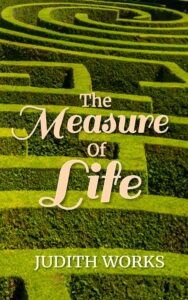
Novelist Judith Works chats with me about her women’s fiction, The Measure of Life.
Judith is giving away a $20 Amazon or Barnes and Noble (winner’s choice) gift card to a lucky randomly drawn participant as she does her book tour. To be entered for a chance to win, use the form below. To increase your chances of winning, feel free to visit her other tour stops and enter there, too!
Welcome, Judith. Please tell us a little bit about yourself.
After I earned a law degree in midlife, I had the chance to leave the Forest Service in Oregon and run away to the Circus (Maximus). In reality, my husband and I moved to Rome where I worked for the United Nations Food & Agriculture Organization for four years as a legal advisor to the director of human resources. I could see the Circus that hosted chariot races during the Roman Empire from my office window.
We reluctantly returned to the US after four years. But we pined for the land of pasta, vino, art, and sunny piazzas. Then the gods smiled and offered a chance to return to Rome with the UN World Food Program. Six more years of food and frolic in the Eternal City passed much too quickly. The indelible experiences living in Italy and working for the UN were the genesis of my memoir, Coins in the Fountain.
Please tell us about your current release.
A story of love and loss, lies and truth, begins in Rome as Nicole shares a cappuccino and cornetto with her Italian tutor. The meeting sets off a chain of events that upends the course of her life. While Rome also brings deep friendships and immersion into a sumptuous food scene there is no escape from acknowledging the consequences of her actions. In search of forgiveness and healing, she moves to an island near her childhood home in Seattle only to find the way to reunite the remnants of her family and discover her true path is to return to Rome and face the past.
What inspired you to write this book?
I lived the expat life in Rome for ten years, and I grew to love it despite the challenges of living in a foreign language and the occasional chaos of life in a city that struggles to meld ancient and modern. I saw the effect of expat life on many families far from their usual support network and wanted to write about the so-called “trailing spouses” who come to Rome because of their husbands’ work and are left adrift.
Here’s an excerpt taken from the early part of The Measure of Life:
“Alessandro and I met twice a week. To control my raging emotions, I stayed away from subjectswhich could be misconstrued as provocative. I asked questions about Rome and told him aboutlife in the United States. I honored his request to tell him how patients like to be spoken to inAmerica by imagining how I would want to be told.
I struggled, wanting to be with him—not to talk about the newspaper headlines or hamburgers but to learn the details of his life and his hopes for his future. Not cardiology but other matters of the heart. It wasn’t hard to sense he too was finding our meetings ever more difficult as he began a sentence on some innocuous subject then stuttered to a halt. As the space between our discussion topics lengthened, the tension increased.
One day he said, “Nicole, you never talk about you, what you want in life. Let’s not talk about American food anymore.” He placed his warm hand over mine. I could feel his pulse beating at the same rapid pace, throbbing throughout my body.
I wanted to tell him I needed love, comfort, and encouragement but couldn’t articulate the words. I wanted to say it was important to be a good mother, and I wanted to say some time I’d make up for dropping out of school—become a professional like most of my friends who’d gone on to graduate and start careers.
To break the dangerous spell, I reached for my coffee with the other hand, but accidentally knocked over the cup, spilling it on the table. He withdrew his hand to wipe the mess away.
“Will you come again next week?”
I mumbled, “Yes.” He gathered his books and hurried away. I was rooted to the chair, my mind racing with anticipation I could not tamp down.
****
When I got back to our apartment Martin was home. “Where were you?”
“Working on my Italian. I need the language if you want me to manage here.”
“There’s laundry in my suitcase.”
I could feel my face contort in anger. He looked alarmed and added, “Nice to be home. What’s for dinner?” It didn’t quell my rage. It was easier to manage without his presence and I hoped he’d be off again soon.”
What exciting project are you working on next?
I’m working on another novel, this time set in the Pacific Northwest, my home area. It will have an element of mystery, particularly the mystery of family.
When did you first consider yourself a writer?
It depends on the definition of writer – After three university degrees, I worked as a bureaucrat and lawyer and wrote legalese all the time. As a creative writer, it began one dark and rainy morning after we returned from Rome. I began to think of all the wonderful and crazy experiences we had in Italy and elsewhere and decided to write a memoir. It took a while to transfer my brain from legal bumpf to creativity, but I eventually finished Coins in the Fountain, my memoir of working for the United Nations and of Rome.
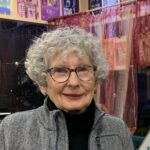
Do you write full-time? If so, what’s your workday like? If not, what do you do other than write and how do you find time to write?
I don’t write full time which is one reason I’m slow. Beyond managing daily life, I’ve volunteered with various civic groups including the library friends, annual creative writing conference, and was one of the founders of a creative writing non-profit.
What would you say is your interesting writing quirk?
Hmmm, not sure it’s a quirk but I only use a desktop for writing with soft jazz in the background.
As a child, what did you want to be when you grew up?
Looking back, it seems that I had a remarkably dull childhood and never seriously contemplated anything other than wanting to see the world. Childhood mostly unfolded without incident. Lack of a specific goal led to an unhappy first marriage, but galvanized me into realizing I wanted higher education, and a career. And so, I was fortunate in being able to travel and to have the experience of living in a different culture. So far, I’ve visited over 120 countries.
Links:
Website | Facebook | Instagram | Threads | Amazon | Barnes and Noble | Kobo | Google Play | iTunes | Books a Million
Thank you for featuring Judith Works and THE MEASURE OF LIFE today.
Hi Everyone – I’m happy to be featured on Lisa’s blog. If you have any questions I’m happy to respond.
Thanks for sharing. Sounds really good.
Hi Marcy – I hope you get a chance to read it!
This looks like a very good book.
Hope you have a chance to read it!
I’m looking forward to checking this book out. Thanks for sharing.
Mesmerizing cover
Do you write with a particular reader in mind, or its it in mind, or is it more like writing to an echo in your own mind?