
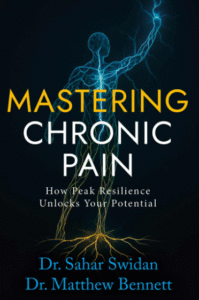
Dr. Matthew Bennett is chatting with me about his book, Mastering Chronic Pain: How Peak Resilience Unlocks Your Potential.
Bio:
Dr. Matthew Bennett is an orthopedic spine surgeon and functional medicine expert who has dedicated his career to helping individuals overcome chronic pain and unlock their full potential. With a foundation in Nutritional Sciences from Cornell University, fellowship training at the multidisciplinary Texas Back Institute, and board certifications in orthopedic surgery and regenerative medicine, Dr. Bennett brings a unique, integrative approach to healing. His work bridges the best of medicine, movement, and mindset, empowering patients to reclaim their lives and thrive beyond pain through resilience and transformation.
Welcome, Matthew. What do you enjoy most about writing nonfiction?
I enjoy translating complex science into something personal and empowering. Non-fiction in the health space isn’t just about facts – it’s about connecting those facts to real lives. Writing this book gave us the chance to tell stories that matter, stories that reflect the invisible struggles so many people live with every day, and to offer a way forward that feels possible.
What genre are you inspired to write in the most? Why?
Health-related nonfictions is where I feel most inspired. I’m drawn to the intersection of science and human experience. There is so much more to peak health and resilience than pure medical treatment. When people learn how to use multiple tools to take back their health, their life can get so much better.
What exciting project are you working on next?
We’re developing a companion course to Mastering Chronic Pain – a learning experience designed to meet people where they are. Not everyone learns best through reading alone. Some people need visual structure, others need to reflect and journal, and some thrive through guided audio or video. This course is our way of offering another canvas – a space for deeper integration, more interactivity, and real-world application of the Resilience Code. Our goal is to help participants not just understand the material but to practice it and embody it in ways that shift how they live, move, and relate to their pain.
When did you first consider yourself a writer?
Funny enough, I didn’t – at least not at first. I came into this as a clinician and educator. Every day as a physician is teaching and educating and encouraging your patients. But after co-authoring two books – one for physicians (Advanced Therapeutics in Pain Medicine) and one for people living with chronic pain – and giving countless lectures, I think I’ve finally run out of excuses. Apparently, if you keep writing, people will start calling you a writer… and eventually, you have to agree with them.
How do you research markets for your work, perhaps as some advice for writers?
I write about what I know – and what I’ve witnessed in the lives of the people I care for. That’s my starting point. From there, I zoom way out: I study the modern science of pain, neuroscience, metabolic medicine, and traditional treatment approaches. I also make a point to learn from people outside my discipline – psychologists, researchers, even patients themselves. I try to see the work through different lenses and connect the dots in ways that reflect the complexity of chronic pain. For other writers, my advice is this: don’t just research your topic – research your people. Understand their needs, their language, their hopes.
What would you say is your interesting writing quirk?
I’m way more comfortable writing technically – that’s how I was trained for years. My writing process usually starts with me sitting behind a giant pile of scientific papers, immersed in the data. The real challenge – and the quirk – is translating all of that into something clear, relatable, and truly helpful. It’s like building a bridge between the science and the human experience. That’s where the real work begins.

As a child, what did you want to be when you grew up?
I went through the usual list of childhood dream jobs like astronaut, firefighter, maybe a short-lived attorney phase…but honestly, I have a pretty classic doctor origin story. I decided early on that I wanted to go into medicine, and once I made that decision, I dove in headfirst.
Anything additional you want to share with the readers?
If you’re living with chronic pain, know this: you’re not broken, and you’re not alone. Pain may shape your story, but it doesn’t get to write the ending. Resilience isn’t about perfection, it’s about persistence. And healing isn’t always a straight line. Keep moving.