
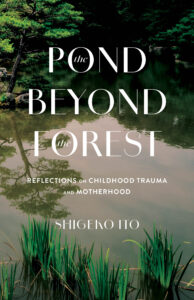
Memoirist Shigeko Ito chats with me today about The Pond Beyond the Forest: Reflections on Childhood Trauma and Motherhood.
Bio:
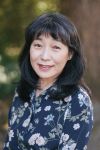
Shigeko Ito is an educator, mental health advocate, and author of the memoir The Pond Beyond the Forest: Reflections on Childhood Trauma and Motherhood (She Writes Press). She grew up in Japan and immigrated to America in her twenties to pursue higher education, earning a PhD in Education from Stanford University. Drawing on cross-cultural experiences and academic expertise, she explores themes of trauma, resilience, and healing, with a particular focus on childhood emotional neglect. For many years, she worked at a Montessori preschool in Seattle, Washington, where she lives with her husband of thirty years.
Please tell us about your current release.
The Pond Beyond the Forest: Reflections on Childhood Trauma and Motherhood is a memoir that explores the lasting impact of childhood emotional neglect and attachment trauma. I immigrated to America as a young adult to escape my dysfunctional and disconnected family and Japan’s rigid society, but the effects of unresolved trauma followed me through my adult life, especially in motherhood and marriage. This journey documents how I gained clarity on the root causes of my lifelong struggles. The story weaves together my present life as a middle-aged wife and mother raising a teenager in Seattle and my troubled upbringing in Japan.
It’s a deeply personal account that reveals unconscious generational patterns, cultural conditioning, and automatic habits born out of surviving what I perceived to be an unsafe and unpredictable environment. It is also about the search for connection and my authentic self. Nature and animals play an important role throughout the story, symbolized by the pond and koi from my childhood home, which served as a source of solace and grounded me.
My hope is that this story resonates with anyone navigating the long tail of unresolved trauma, seeking meaning, or striving to break cycles for the next generation. By giving voice to those who feel unseen, unheard, or invalidated, I hope my story will offer a sense of shelter and help them feel less alone. By speaking up about invisible and often misunderstood emotional wounds, I hope to raise awareness that they can be just as damaging as more visible forms of trauma, such as physical or sexual abuse.
What inspired you to write this book?
I was inspired by a deep desire to understand myself better and to make sense of what often felt like chaotic life experiences, as well as a need to find a sense of purpose—a book project seemed to fit the bill. I also felt called to share the hard-earned knowledge and wisdom I gained through my struggles, offering hope that with awareness and recognition of this condition, healing becomes possible.
What exciting project are you working on next?
Currently, my main focus is on promoting my memoir, a process I find both rewarding and challenging. To better connect with audiences, I’ve recently joined Toastmasters, where I’m actively building my confidence in public speaking. Therefore, my current project centers on refining my communication skills to share my story more effectively with diverse groups.
When did you first consider yourself a writer?
I still find it a little surreal to call myself a writer. My background is in academic writing, and I only began learning creative writing about eighteen years ago. Completing my memoir was a turning point. While I sometimes think of myself as an “accidental writer and author,” I’ve come to appreciate both the creative process and the power of sharing personal stories.
Do you write full-time? If so, what’s your workday like? If not, what do you do other than write and how do you find time to write?
I don’t write full-time; instead, I write when inspiration strikes rather than following a strict schedule. While I may not be a disciplined daily writer, I love immersing myself in the writing process whenever I feel compelled. Being in the zone is exhilarating—I lose sense of time and can write for hours on end.
What would you say is your interesting writing quirk?
I love idioms and have a tendency to overuse them. At one point, an editor even made a list andasked me to pare them down. I did, but when another editor suggested replacing even more, I had to put my foot down and say, “That’s how I talk—I speak in clichés! If I take them all out, it won’t sound like me.”
As a child, what did you want to be when you grew up?
I wanted to be a flight attendant—back then, we called them stewardesses—because I loved the idea of traveling and meeting people from all over the world. Even at a young age, I was fascinated by different cultures and wanted to find a way to connect with people everywhere.
Links:
Website | Bluesky | Facebook | LinkedIn | Instagram | Twitter/X