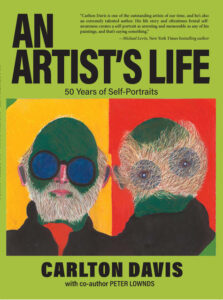
Writer and artist Carlton Davis chats with me about his memoir, An Artist’s Life.
Bio:
Carlton Davis, artist, architect, and author, has been making art since childhood. While living in the Arts District in downtown Los Angeles, he created the Art Dock gallery in his studio’s loading dock, making the first drive-by art gallery. His focus on drawings, including self-portraits, led him to teaching drawing at Otis Art Institute.
As an architect, Carl designed the LA METRO North Hollywood subway station and was the project manager. He led the architectural team for the Los Angeles Mission in LA’s Skid Row. He frequently incorporates commissioned art works in his projects. Davis lectured in architecture at UCLA, Woodbury University, and was Assistant Professor at the University of Wyoming.
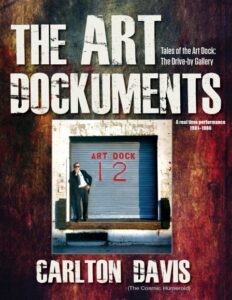
As an author, Davis was chairman and design critic for LA Architect newspaper. In 2009, he published his book Bipolar Bare, documenting his struggle with Bipolar 1 Disorder. In 2012, he published The Art Dockuments, about the Art Dock. He held writing residencies at Montalvo Arts Center and Dorland Mountain Arts Colony. He is a draftsman and sculptor as well as a writer and often incorporates his drawings into his writing.
Combining these skills keeps Carl busy. He has presented his work to various audiences throughout the US and UK. He holds degrees from Yale College, Yale University School of Architecture, and University of London, UK.
Please tell us about your current release.
An Artist’s Life tells of my relentless search for resolution of my desire to be an artist. Despite degrees in architecture and work with luminary architects, my métier is making art. I used to relate to the art stars while berating myself for lacking their talent and discipline. I broke through by observation and documenting my experiences in my journals for more than 50 years.
Life’s travails bedeviled me, and I struggled with many problems, even sitting in silent meditation and ending up at a mental hospital, where a gifted psychiatrist proved to me that I suffer from Bipolar 1 Disorder and helped me initiate sobriety and recovery.
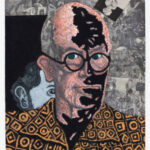
Self-portraits are set throughout An Artist’s Life. In this book, I tell my story in joyous collaboration with my co-author, Peter Lownds.
What inspired you to write this book?
Since my “relentless search” just about ate me alive but ended in the very success I need so badly, I wanted to share it, not only to amuse but to encourage others to stay the course with their dreams.
Excerpt from An Artist’s Life:
Two police officers approached the truck and ordered me to get out and stand on the sidewalk. I did as I was told, tottering on my high heels. One cop shone his light on me while the other questioned me. ‘What are you doing driving around at two in the morning?’ ‘I’m on my way home after a costume party.’
He looked dubious and turned to consult with his partner. I trembled with foreboding, imagining the humiliation of having to spend the remainder of the night in the slammer and Ginger’s reaction to having to bail me out in the morning and bring me back home in full drag. A high-decibel voice came over the patrol car’s two-way radio, ‘Shooter at Alameda and 30th!’ The officers scurried back to their car. As they drove away, tires screeching, the cop riding shotgun shouted, ‘Nice outfit, girl!’
What exciting project are you working on next?
I plan to write Las Vegas Then and Now, which is an idea I have been working on for the last 20 years. Las Vegas, so unique, has a real history and has transformed itself frequently. The city started out as a train stop, then became a driving destination, and eventually became an air hub, too. Each added mode of transportation has changed the city in concept and form.
When did you first consider yourself a writer?
During my college years, even while studying architecture I wanted to be a novelist after reading E.E. Cummings’s The Enormous Room. Then I discovered I could draw, too, and wanted to write and make art as Vincent van Gogh did. I actually became a writer when in 1969 I bought a cheap notebook to record my trip to Europe: I have not stopped adding to my journals since. They have proven invaluable sources for events I have covered in all three books to date.

Do you write full-time? If so, what’s your workday like? If not, what do you do other than write and how do you find time to write?
No – when I am not writing, I am making art, which is so consuming, too. It’s challenging to break away from one to pursue the other. I don’t need to invent my story, just to tell it. I go to my studio and write from 10 a.m. to as late as 7 p.m. on many days.
But no two days are ever the same. So I make art, I write, and I am still interested in architecture. I’m still a licensed architect in California. I am a reader, too, and some days I read in the morning. Other days, especially now that I am older, I go for physical therapy, voice therapy, and other exercise.
What would you say is your interesting writing quirk?
I am so very left-handed that if I write something by hand, the result is at a steep angle, almost vertical, so I always have to twist the page on which I am writing. But I imagine a lot of lefties do this, too.
As a child, what did you want to be when you grew up?
I dreamt of being a professional baseball player, and I was approaching that at one point during my late teenage years, even playing semi-pro ball for the Lexington (MA) Red Sox. Then I injured my pitching arm beyond repair. I’ll always be a baseball fan.
Anything additional you want to share with the readers?
If anything, this book is about persistence.